Biogas plants
Biogas plant solutions
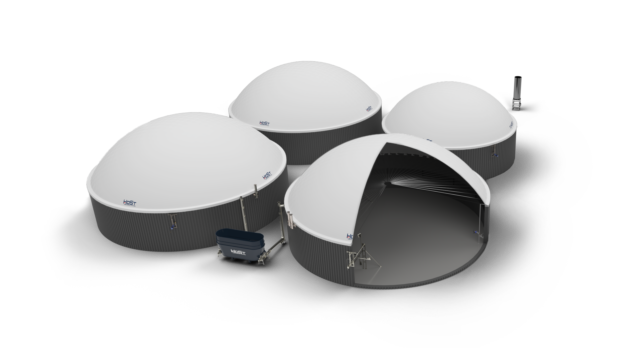
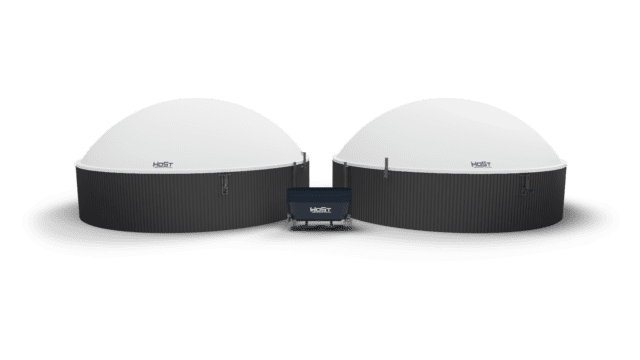

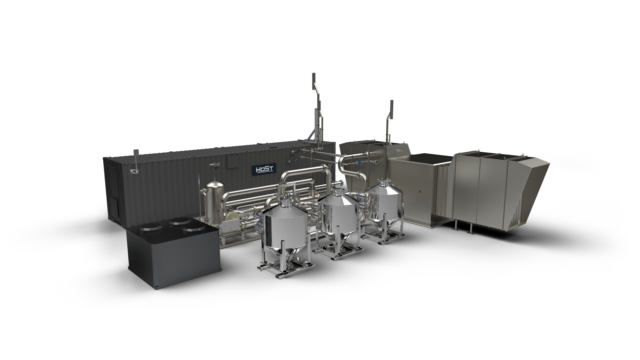
Our turnkey biogas plant solution
Our biogas plants can be supplied with in-house biogas upgrading, bio-LNG, bio-CNG, and CO2 liquefaction technology. The image below is an illustrative representation.
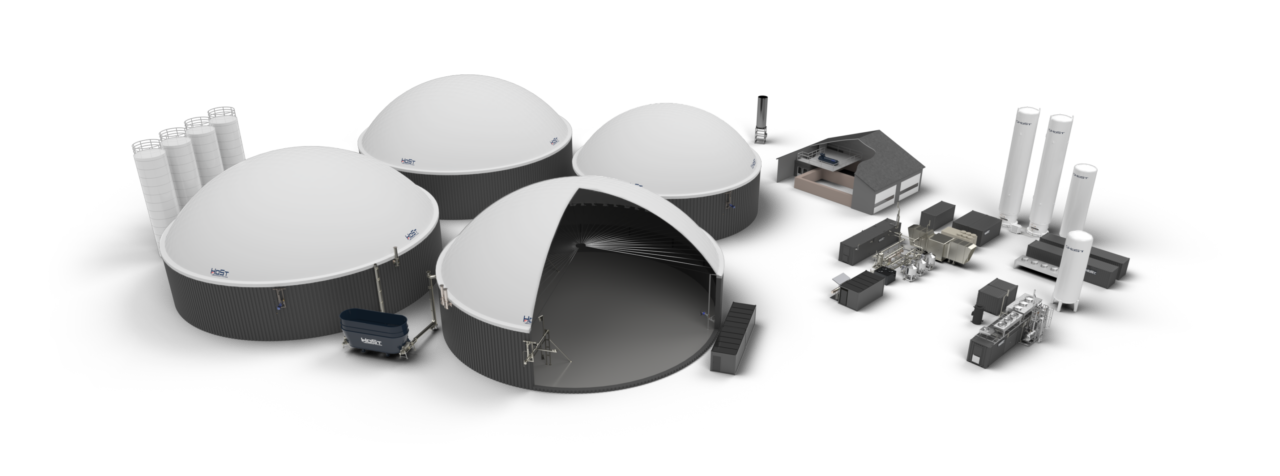

















Biogas production
Innovation and research are high priority at HoSt, leading to a constant optimization of our anaerobic digestion technology and our biogas plant design. This translates into robust biogas plants suitable for all types of feedstock and repowering of biogas plants. Repowering ensures high efficiency and maximizes the potential of the existing biogas plant.
Biogas plants for many industries
Advantages
- Full in-house technology portfolio
- Easy operation due to in-house software
- Flexibility with all types of feedstock
- Heat recovery & double membrane roofs
- 24/7 service & maintenance

Contracting flexibility
HoSt provides flexibility in contracting, which translates to turnkey biogas plants or a reduced scope consisting solely of design and key components. With our flexibility in contracting, we can meet any requirements your project may have. Therefore, we can customize technologies to preferred criteria and guarantee the ideal implementation of the biogas facility.
Project steps
Biogas plant calculator and configurator
A successful biogas project starts with the biogas plant configurator from HoSt. This innovative tool provides comprehensive mass and energy balances tailored to your unique needs. Additionally, the biogas plant calculator takes the Carbon Intensity score (CI-score) into account. With the biogas configurator, we can perform calculations for biogas plant projects. For increased profitability of the project, the biogas calculator provides professional advice on feedstock configuration and offtake services. Resulting in the best Total Cost of Ownership (TCO) for your project, the lowest CO2 footprint, and the highest possible revenue.
Biogas from sugar waste
This biogas facility at Fontenoy, Belgium transforms beet residuals, such as beet tops, into renewable energy. After the first successful project for Iscal, HoSt has developed a second biogas plant. The biogas plants efficiently process up to 200 tons of waste daily during the sugar beet campaign. After a pretreatment, the biogas is directly applied in Isera & Scaldis’ sugar production process which contributes to sustainable sugar manufacturing and a greater independency of fossil natural gas. Aligning organic waste production with the factory’s heat demand.

Frequently asked questions
What feedstocks can a HoSt biogas plant process?
A HoSt biogas plant handles almost any organic stream, from manure and food-processing residues to crop residues, fats and oils, sewage sludge and source-separated municipal waste. The design prioritises feedstock flexibility, including the difficult fibrous and high-viscosity inputs that many standard digesters struggle with, so the plant keeps producing when your supply mix shifts. More information.
What does a biogas plant produce?
Two core outputs: biogas, used directly or upgraded to biomethane, and digestate, a nutrient-rich residue applied as a biofertiliser. With the right add-ons the biogas becomes bio-LNG or bio-CNG, and the separated biogenic CO2 is recovered as a saleable, food-grade product. One feedstock stream can therefore feed several revenue lines. More information.
How much uptime can a biogas plant achieve?
Because biogas is dispatchable, a well-designed plant produces around the clock, whatever the weather. HoSt plants are built for high availability with remote monitoring, automated controls, and 24/7 service: we guarantee 95% availability and typically reach 98 to 99%. A diverse feedstock mix and sound process design keep that figure steady. More information.
How can the biogas be used?
Depending on your infrastructure and offtake, biogas can fuel a CHP unit for on-site power and heat, be upgraded to grid-quality biomethane, or become bio-LNG or bio-CNG for transport. The biogenic CO2 removed during upgrading is a further product for the food, greenhouse, and industrial markets. The configurator helps identify the route with the best return for your project. More information.
Do I need biogas upgrading?
Upgrading is the step you add when you want to deliver biomethane to the gas grid or make transport fuel, rather than burning biogas on site for heat and power. It strips out CO2 and impurities to lift methane to grid quality and integrates as an add-on to the plant. Whether it pays off depends on your grid access, incentives, and offtake. More information.
Can different feedstocks be combined in one biogas plant?
Yes. Combining streams (co-digestion) is standard practice and often the route to the most stable process and the highest yield, because a balanced mix evens out the fluctuations of any single input. The feeding and mixing configuration is matched to your specific feedstock combination. More information.
We realized biogas plants for